Beyond Cute: How the Baby Puppy Font Delivers Playful Branding
In the crowded landscape of digital design, finding a typeface that genuinely captures a specific emotion can feel like searching for a needle in a haystack. We often see fonts that are either too serious, stripping the warmth out of a project, or too chaotic, rendering text unreadable. However, there is a distinct sweet spot where personality meets function, and that is exactly where the Baby Puppy typeface lives. It is not merely a collection of letters; it is a visual language designed to communicate joy, innocence, and approachability instantly. For designers, small business owners, and content creators working within the pet care, children’s education, or family lifestyle sectors, this font offers a solution to a common problem: how to look professional while remaining undeniably friendly.
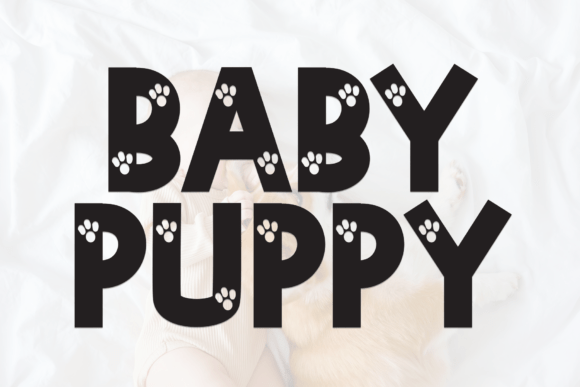
The core appeal of this display font lies in its successful marriage of bold geometry and whimsical detail. Visually, it utilizes clean, chunky shapes that provide a sturdy foundation. This ensures that even at smaller sizes or on lower-resolution screens, the text remains legible. Yet, the designers have integrated subtle paw print accents into the letterforms. This is a delicate balance to strike in typography. If the thematic elements are too aggressive, the text becomes a novelty item rather than a functional design asset. With Baby Puppy, the paw details are embedded in a way that adds texture and charm without disrupting the flow of reading. It transforms standard headlines into engaging visual hooks.
Strategic Applications for Pet and Family Brands
When considering a premium font for commercial use, versatility is key. You need a typeface that can transition from a digital header to a physical product label without losing its impact. This is particularly true in the packaging design for pet products. Imagine a shelf full of dog treats or cat toys. The packaging often relies on generic sans-serif fonts or overly scripted, difficult-to-read lettering. Baby Puppy offers a middle ground. Its bold geometric lettering commands attention on a shelf, while the playful accents immediately signal to the consumer that this product is for their furry friend. It creates an immediate connection between the brand identity and the consumer's affection for their pet.
Beyond the pet industry, the font is a strong contender for children’s designs. Whether you are creating invitations for a first birthday party or designing graphics for a daycare center, the font sets a specific tone. It suggests a safe, cozy, and fun environment. For small business owners selling baby apparel or accessories, utilizing this typeface in your logo design or hang tags can differentiate your brand from high-fashion, minimalist competitors. It tells the customer, "We are approachable, we are fun, and we understand the joy of childhood." This is a powerful branding message that requires no words other than the font choice itself.
Technical Readability and Visual Consistency
A common pitfall with thematic display fonts is the sacrifice of readability for style. You might find a font that looks beautiful in a preview but falls apart when used for an actual headline because the letter spacing is too tight or the shapes are too ambiguous. Baby Puppy is designed specifically for eye-catching titles and headlines, meaning it has been optimized for short bursts of high-impact text. The "clean, chunky shapes" mentioned in its description are crucial here. They ensure that the visual weight of the text is balanced, making it perfect for posters, social media graphics, and website hero sections.
However, as with any creative font, context is everything. While it excels in headlines, it is not intended for long-form body copy. A 500-word paragraph set in a decorative display font will tire the reader's eyes. The professional approach is to use Baby Puppy for the "hook"—the title, the main offer, or the call to action—and pair it with a highly legible sans serif font or a clean serif font for the supporting text. This contrast creates a visual hierarchy that guides the reader's eye naturally from the playful headline to the informative body text.
Integrating Baby Puppy into Modern Marketing Assets
In today's multi-platform environment, your brand identity needs to be fluid. A font that only works on a business card is a wasted investment. This typeface shines when applied to digital products and merchandise. For content creators and bloggers, think about your Pinterest pins or Instagram stories. Visual platforms demand high engagement. A header written in a handwritten font or a standard script might blend in with the noise. Baby Puppy, with its distinct personality, stops the scroll. It adds a layer of professionalism to your social media graphics that stock fonts simply cannot provide.
Furthermore, consider the world of editorial design. If you are publishing a magazine, a newsletter, or a blog focused on animal welfare or parenting, this font can serve as a recurring visual motif. Using it for pull quotes or section headers breaks up the monotony of standard text blocks and reinforces the publication's thematic focus. It turns a simple layout into a cohesive brand identity system. For marketing professionals, this consistency builds trust. When a customer sees the same distinct typography across your website, your email campaigns, and your product packaging, they subconsciously register your brand as established and reliable.
Practical Advice for Typography Pairing and Licensing
Choosing the right font is only half the battle; knowing how to use it effectively is the other half. When working with a modern typography asset like Baby Puppy, you should always test your font pairings before finalizing a design. Because Baby Puppy has a "chunky" and playful vibe, it pairs exceptionally well with geometric sans-serifs (like Montserrat or Poppins) for a modern look, or with a soft, round sans-serif to maintain that cozy feeling. Avoid pairing it with overly ornate serif fonts or competing script fonts, as this will create visual clutter rather than contrast.
Additionally, it is vital to review the specific styles included with the font family. Does it come with bold weights? Are there alternate characters? Understanding these nuances allows you to customize your typography to fit specific spaces. For instance, if you are designing a logo, you might want to adjust the kerning (space between letters) to ensure the paw print details don't overlap awkwardly.
Finally, never overlook the practicalities of commercial licensing. If you are a small business owner or a freelance designer, you must ensure that the license covers your intended use. Most premium fonts distinguish between desktop use (for print materials, logos, and packaging) and web use (for website CSS). If you plan to use the font for merchandise like T-shirts or mugs, you often need an extended license. Always read the End User License Agreement (EULA) to avoid legal headaches down the road.
Ultimately, typography is a tool for communication. The Baby Puppy font is a specialized tool designed to communicate warmth, fun, and affection. It is an asset that, when used correctly, can elevate a project from generic to memorable. Whether you are refreshing a pet brand, launching a new line of children’s products, or simply looking to add some personality to your digital presence, this typeface offers a robust blend of visual appeal and functional design. It proves that in the world of design, you don't have to choose between being cute and being professional.