Amber: The Grumpy Cookie Font That Brings Bite to Your Branding
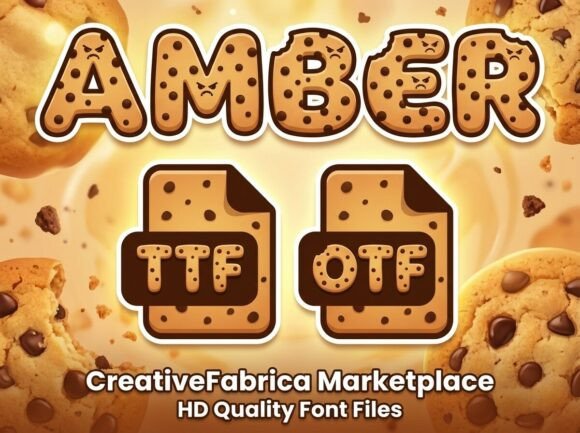
Let's be honest: most cookie-themed fonts are tooth-achingly sweet. They're all swirls and smiles, perfect for a preschool flyer but utterly useless when your brand needs to show some teeth. What if your baked goods have attitude? What if your snack packaging needs to wink at the customer with a hint of playful defiance? Enter Amber, a chunky, rounded display font that's styled after a chocolate chip cookie but sprinkled with a surprising amount of grumpy-faced chips. It’s the typeface that says, "I'm delicious, but don't push it." This isn't just a novelty; it's a strategic design asset for anyone who understands that the most memorable branding often balances charm with a dash of cheek.
A Typeface with Texture and Personality
At its core, Amber is a premium display font designed for impact, not body text. Its visual appeal lies in its detailed, tactile quality. The letterforms are thick and rounded, mimicking the imperfect, crumbly edges of a freshly baked cookie. The defining feature, of course, is the "bite" marks strategically placed on certain characters and the collection of grumpy-faced chocolate chips integrated into the design. This isn't a sterile, perfect vector; it's a character-driven typeface that injects immediate narrative into a design. The personality walks a tightrope between cute and edgy, making it incredibly versatile. It can feel wholesome and homemade for an artisan bakery, yet simultaneously rebellious and fun for a modern snack brand targeting millennials. This duality is its superpower, allowing it to serve a wider range of creative projects than a single-note "cute" font ever could.
Where to Unleash This Edgy Sweetness: Practical Applications
The true value of a creative font like Amber is measured by its utility. It’s not just for looking at; it’s for working with. Here’s where it can transform your projects from ordinary to unforgettable.
- Branding & Logo Design: For a bakery, café, or artisan food brand, Amber is a natural fit. Use it for your primary wordmark to instantly communicate a playful, approachable, yet distinctive personality. It’s perfect for a brand that doesn’t take itself too seriously but is serious about quality. Pair it with a clean, minimalist sans-serif font for your tagline or body copy to ensure readability and professional balance.
- Packaging Design: This is where Amber truly shines. Imagine a bag of craft cookies, a box of gourmet snack bars, or a bag of specialty coffee. Using Amber for the product name on the packaging creates instant shelf appeal. The tactile, "edible" quality of the font makes the product feel tangible before it’s even opened. It’s a powerful tool for packaging design that needs to stand out in a crowded market.
- Social Media & Digital Marketing: In the endless scroll, personality stops thumbs. Use Amber for bold headlines on Instagram posts, Facebook ads, or Pinterest graphics. It’s fantastic for announcing a new product, promoting a sale, or creating engaging Stories. The grumpy chip details add a layer of humor and relatability that can significantly boost audience engagement and shareability.
- Events & Print Materials: Think beyond the commercial. Amber is a stellar choice for a kid’s birthday party invitation, a school bake sale flyer, or a fun poster for a local food festival. It sets a tone of playful mischief that generic fonts can’t match. For a small business, it can also be used on loyalty cards, menu headers, or seasonal promotional postcards to create a cohesive and memorable brand experience.
- Merchandise & Editorial Layouts: For creators and bloggers, Amber can lend its unique voice to merchandise like t-shirts, mugs, or tote bags. In an editorial context, like a food magazine or a cookbook chapter opener, it can be used as a striking pull-quote or chapter title to inject visual interest and thematic cohesion.
Smart Font Pairing: How to Let Amber Shine Without Overpowering
A display font with this much character demands a thoughtful partner. The golden rule is contrast. You wouldn’t pair two loud, personality-driven fonts together; they’ll compete for attention and create visual chaos. Amber needs a quiet, confident companion to let it be the star of the show.
Your best bet is a clean, geometric sans-serif font. Think fonts like Montserrat, Poppins, or Lato. These provide a neutral, highly readable foundation that grounds Amber’s whimsy. Use the sans-serif for all your body copy, descriptions, and supporting text. This pairing ensures your design remains legible and professional while letting Amber’s unique personality headline the act.
For a more sophisticated or editorial feel, you could also pair it with a simple, modern serif font. A serif like Lora or Playfair Display can add a touch of elegance, creating an interesting high-low contrast with Amber’s playful vibe—imagine a gourmet dessert menu where the item names are in Amber and the descriptions are in an elegant serif.
The key is to test your pairings. Lay out a mock-up of your project. Does the hierarchy feel clear? Is the body text easy to read at a glance? Does the overall feel match your brand identity? Amber is best used sparingly—as a headline, a logo, or a key graphic element—so its impact remains strong.
Considering the Practicalities: Licensing and Readability
Before you commit to a creative font for a commercial project, two practical considerations are non-negotiable: licensing and readability.
Licensing: Always, always check the font’s license. Amber is a premium, commercial font. This means you need to purchase the appropriate license for your intended use—whether it’s for a single client project, for your own business’s branding, or for creating products for sale (like merchandise or digital templates). Using a commercial font without the proper license is a serious legal and ethical misstep. Reputable font marketplaces and foundries make licensing terms clear, so review them carefully.
Readability: As a display font, Amber is not designed for long paragraphs. Its strength is in large, short bursts of text—headlines, titles, logos. At small sizes or in lengthy sentences, the intricate details (like the bite marks and chip faces) can become muddy and compromise legibility. Always test your design at the intended output size. Will it be clear on a mobile screen? Will it print crisply on a business card? For any text that needs to convey detailed information, rely on your paired sans-serif or serif font. Using Amber strategically ensures it enhances your design rather than hindering its clarity.
In a world saturated with generic and overly saccharine design assets, a font like Amber offers a breath of fresh, slightly grumpy air. It provides a tool for creators, entrepreneurs, and designers to inject genuine personality and narrative into their visual communication. By understanding its strengths, pairing it wisely, and applying it strategically, you can leverage this unique typeface to build brand recognition, foster audience engagement, and create designs that are not only seen but remembered. It’s more than a font; it’s a statement piece for your brand’s kitchen table.