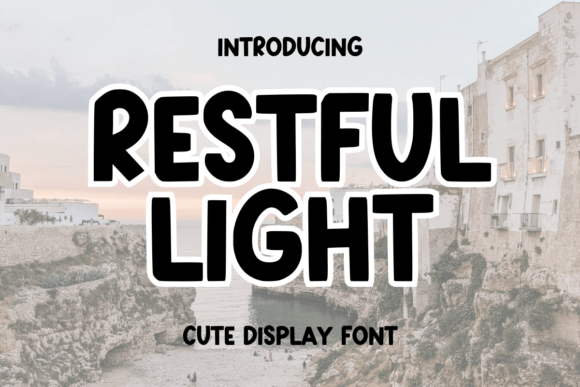
Finding Calm in the Chaos: The Restful Light Typeface
There is a specific kind of visual tension that comes from seeing a friendly, approachable message rendered in a stiff, corporate typeface. It creates a disconnect; the words say one thing, but the design screams another. If you are building a brand, designing a wedding invitation, or crafting social media graphics that need to feel warm and genuine, you are likely searching for a typeface that breathes. You need something that feels like a Sunday morning or a cozy chat with a friend. That is exactly where Restful Light enters the conversation. As a sweet and friendly display font, it bridges the gap between professional polish and personal warmth, offering a natural aesthetic that feels immediately welcoming to the viewer.
The Anatomy of a Friendly Display Font
When we talk about Restful Light as a display font, we aren't just talking about its size; we are talking about its personality. Unlike sans serif fonts that prioritize neutrality or serif fonts that often demand authority, this typeface is designed to be the face of your project. It carries a distinct "sweet" quality, which usually implies rounded edges, a slight bounce in the baseline, and a handwritten flair that doesn't look messy. It strikes a delicate balance. It feels like a handwritten font, but with the consistency required for professional use.
The visual appeal lies in its "natural" feel. In modern typography, we are seeing a massive shift away from rigid geometry. Consumers and audiences are craving authenticity. They want to feel that a human is behind the design. Restful Light mimics the irregularity of the human hand, which subconsciously signals to the viewer that the content is personal and accessible. Whether you are a small business owner selling handmade candles or a blogger sharing travel diaries, this font tells your audience that you are approachable before they even read a word of your copy.
Practical Applications: From Packaging to Pixels
The versatility of a premium font is measured by how well it adapts to different mediums. Because Restful Light has a unique style, it fits a surprisingly large pool of designs. It is not limited to one niche. For packaging design, imagine this font wrapping around a box of artisanal chocolates or a bottle of organic shampoo. It immediately elevates the product, suggesting that what is inside is crafted with care. It acts as a visual promise of quality.
In the digital realm, the applications are just as broad. Web design often suffers from a lack of personality. While you wouldn't use a display font for long paragraphs of body text (that is where a legible sans serif shines), Restful Light is perfect for headers, hero text, and call-to-action buttons. It grabs attention without being aggressive. For social media graphics, where you have milliseconds to stop a user from scrolling, a distinct header font is your best weapon. It creates a visual hook that encourages engagement.
Furthermore, consider the world of editorial design and invitations. If you are designing a wedding suite, a baby shower invite, or a menu for a bistro, this font provides that essential touch of elegance and intimacy. It turns a standard card into a keepsake. Even for digital products like PDF guides or eBooks, using Restful Light for chapter titles can break up the monotony of text and make the reading experience more enjoyable.
Building Brand Recognition Through Typography
Typography is the voice of your brand. Just as you choose your words carefully, you must choose your typeface with equal intent. Using a creative font like Restful Light can significantly improve brand recognition. When your audience sees that specific, friendly lettering on a logo design, a website banner, or a poster, they begin to associate that visual style with your identity.
Consistency is key in branding. If your logo uses a stiff, formal font but your Instagram stories use a chaotic mix of scripts, your brand feels disjointed. By adopting a cohesive style—perhaps using Restful Light as your primary display type across all marketing assets—you create a seamless visual journey for your customer. This professional presentation builds trust. It shows that you care about the details, which translates to the perceived quality of your service or product.
For entrepreneurs and marketers, the goal is often to stand out in a saturated market. Many brands default to overused system fonts. By utilizing a distinct design asset like this, you differentiate yourself. It gives your brand a "face" that isn't generic. It says, "We are creative, we are friendly, and we pay attention to aesthetics."
Mastering the Art of Font Pairing
One of the most common questions in design is, "How do I mix fonts?" A display font with a lot of character, like Restful Light, works best when it has a supportive partner. Because it is sweet and stylistic, it needs an anchor. Pairing it with a clean, geometric sans serif font for your body text is often a winning strategy. The contrast allows the header to shine while ensuring the main content remains highly readable.
Avoid pairing it with another script font or a highly decorative serif font, as this can lead to visual clutter. Think of it like an outfit: if you have a loud, patterned jacket, you want solid-colored pants. Restful Light is the jacket; a simple modern typography staple is the pants.
Tips for Testing and Implementation
Before you finalize your design, you must test for readability. A font might look beautiful at 72 points on your monitor, but how does it look at 14 points on a mobile screen? Check the legibility of the letters at smaller sizes. Does the "sweetness" of the curves turn into confusion? Usually, high-quality design assets are optimized to maintain legibility, but it is always worth checking.
Also, take a look at the included styles. Many premium fonts come with alternates, ligatures, or different weights. Does Restful Light offer a bold version for emphasis? Does it have special characters that fit your specific brand identity? Utilizing these features can make your design look custom-made rather than off-the-shelf.
Commercial Realities: Licensing and Usage
Finally, we must touch on the practical side of assets: licensing. If you are using this font for a personal project, the rules are usually relaxed. However, for commercial use—such as on a website that sells goods, on merchandise like t-shirts, or in client work—you must ensure you have the correct license. A commercial font license protects both the designer who created the type and you as the user.
Always read the license details. Can you embed it in an app? Can you use it on print-on-demand sites? Understanding these terms ensures that your project remains professional and legal. Investing in a licensed font is a small cost for the massive value it adds to your visual communication.
Ultimately, Restful Light is more than just a collection of vectors; it is a tool for connection. It allows crafters, designers, and business owners to infuse their work with a sense of calm and friendliness. In a world that is often loud and demanding, offering your audience a visual "rest" might just be the smartest design choice you make.