Tyson: The Bold Display Typeface for Unforgettable Branding
Every designer hits a wall. You're staring at a blank screen, a client brief in hand, or a personal project simmering in your mind. The concept is strong, the color palette is locked in, but something is missing. It’s the typography. You scroll through hundreds of fonts—clean sans-serifs, elegant serifs, friendly scripts—and none of them have the electric charge your design demands. You need a typeface that doesn’t just sit on the page; you need one that commands the room. This is the exact moment a font like Tyson enters the conversation, offering a solution for projects that refuse to blend into the background.
More Than Just Letters: The Visual Power of a Statement Typeface
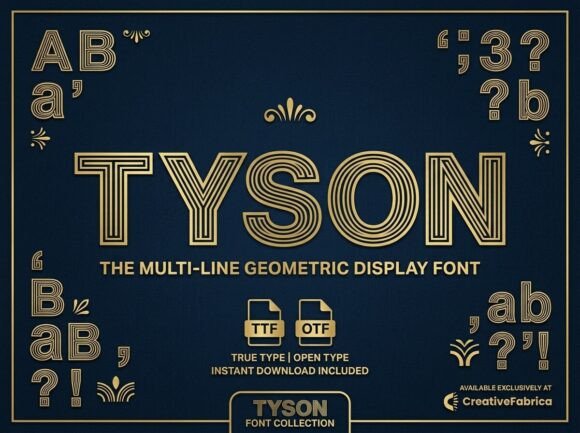
What exactly defines a "stunning decorative display font"? It’s not merely about being different. It’s about a cohesive visual personality built into every curve, serif, and terminal. A typeface like Tyson is engineered for high-impact scenarios. Its artistic elements aren't random flourishes; they are intentional details that create a strong, memorable silhouette. Think of it as the typographic equivalent of a signature piece of architecture or a bold piece of statement jewelry. It has a distinct character that communicates confidence, creativity, and a break from the mundane.
This visual strength stems from its design philosophy. The letterforms likely feature unique artistic touches—perhaps unconventional serifs, dramatic swashes, or carefully crafted ligatures that connect letters in surprising, elegant ways. The "intricate details" mentioned in its description are what separate a premium font from a generic one. They ensure that even at large sizes, the typeface holds interest and reveals new nuances. This is the hallmark of a modern typography asset designed for creators who understand that first impressions are visual, and often, instantaneous.
Practical Applications: Where Bold Typography Meets Real-World Projects
Theory is nice, but application is everything. Where does a typeface with this much personality actually work? Its versatility might surprise you. While it’s perfect for the obvious—like a modern poster that needs a headline you can’t look away from—its utility extends far beyond single-use graphics. For small business owners and entrepreneurs, it’s a tool for carving out a unique identity in a saturated market.
Consider these real-world scenarios:
- Branding & Logo Design: A creative agency, boutique hotel, or artisan coffee roaster could use Tyson to build a logo that instantly communicates innovation and artistry. It helps build brand recognition because the typography itself becomes a memorable asset.
- Packaging Design: On a crowded shelf, a product has about three seconds to catch a shopper’s eye. Using this font for the brand name on a craft beer label, a luxury candle box, or a gourmet snack bag gives it an immediate premium, artistic shelf presence. It tells the customer this product is crafted with care and creativity.
- Apparel & Merchandise: For T-shirt designers, hoodie brands, or tote bag creators, typography is often the entire design. A bold, artistic font transforms a simple garment into a wearable statement piece. It’s perfect for quotes, band names, or graphic slogans that need to resonate at a glance.
- Music & Event Art: The energy of a concert, festival, or gallery opening needs to be felt before the event even happens. Album covers, promotional flyers, and event branding live and die by their visual punch. This typeface is ideal for creating that immediate sense of excitement and artistic caliber.
Strategic Typography: Aligning Font Choice with Project Goals
Choosing a creative font like Tyson should be a strategic decision, not just an aesthetic one. The goal is to match the typography's personality with your project's core message. If you’re designing a website for a law firm, this might not be your primary body text choice. But if you’re creating a landing page for a new design app, a music festival, or a creative workshop, using it for key headlines can dramatically improve audience engagement and communicate the right tone immediately.
One of the most critical pieces of practical advice is to test font pairings. A decorative display font shines brightest when it’s balanced. Pair Tyson with a clean, highly readable sans-serif or a simple serif for body copy. This creates a visual hierarchy that guides the reader’s eye. The display font makes the statement; the companion font delivers the supporting information with clarity. This approach maintains professional presentation while allowing the creative font to do the heavy lifting in terms of personality.
Always consider readability in context. A font designed for impact is not meant for long paragraphs of text. Its strength is in headlines, logos, single words, and short phrases. Reviewing the included font styles (like bold, italic, or condensed versions) can also expand its utility, allowing for subtle variations within the same typographic family across a brand’s assets.
Integrating a Premium Font into Your Workflow
Compatibility is a non-issue for a well-crafted commercial font. Tyson’s seamless function across both PC and Mac, and within industry-standard software like Adobe Creative Suite as well as accessible tools like Canva, means it slots directly into your existing workflow. You can start using it in a client presentation in Illustrator or a social media template in Canva within minutes.
For those creating digital products—like online course materials, e-book covers, or downloadable planners—incorporating a unique display font can instantly elevate the perceived value and professionalism of your offering. Similarly, in editorial design for blogs, magazines, or reports, using it for chapter titles or pull quotes can break up monotony and add a layer of visual sophistication.
Finally, a note on commercial licensing. For any designer, entrepreneur, or business, understanding the license that accompanies a font is paramount. Ensure the license covers your intended use, whether it’s for a single client project, unlimited commercial work, or merchandise that will be sold. This protects you legally and ensures you’re respecting the work of the type designer. Investing in a premium, licensed font is an investment in the quality and legal safety of your own professional work.
In the end, typography is a voice. Some voices are quiet and informative. Others are loud, passionate, and impossible to ignore. For projects that demand the latter, having a typeface like Tyson in your toolkit means you’re always prepared to make a statement that resonates, engages, and is remembered long after the first glance.