Brushriot: When Your Typography Needs to Scream, Not Whisper
There are moments in design when polite, perfectly kerned serif fonts just won’t cut it. You’re not looking for something that blends into the background; you need a visual element that grabs the viewer by the collar and demands attention. This is the domain of the fearless display typeface. It’s the kind of font that feels like it was born in a gritty studio, splattered with paint, and built on raw, unapologetic energy. If your current project feels too safe, too corporate, or lacking that visceral punch, it might be time to stop whispering and start shouting with typography that has genuine presence.
The Anatomy of a Rebellious Typeface
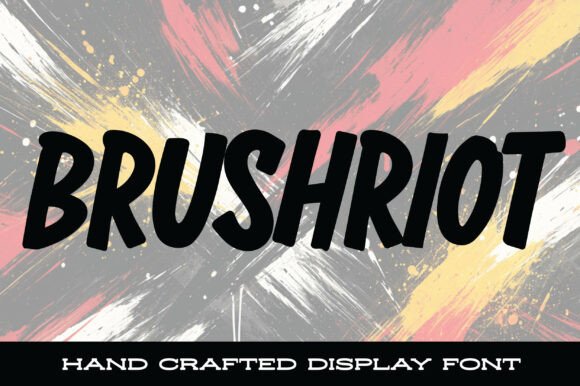
What separates a standard script font from a true display powerhouse? It often comes down to the texture and the "hand" of the typeface. A font like Brushriot is a masterclass in this approach. It isn't just a collection of vector curves; it is a study in motion. Every stroke was designed to feel fast and alive, mimicking the decisive sweep of a loaded brush hitting canvas. This isn't the smooth, predictable flow of a digital script; it is typographic chaos harnessed into legibility.
The visual appeal here lies in the imperfections. In a world saturated with sterile, geometric sans-serif fonts, the natural edge variation found in hand-brushed styles offers a breath of fresh air. You get that tactile feeling—the subtle grit and the rebellious rhythm—that digital type often lacks. It creates an immediate emotional connection because it feels human. It feels like art, not just text. For designers and brand strategists, this texture is invaluable. It allows you to inject a layer of authenticity into your visuals that polished, modern typography sometimes misses.
Injecting Grit into Brand Identity and Logos
For small business owners and entrepreneurs, your logo is the handshake of your brand. If you are launching a streetwear label, a high-energy gym, a craft brewery, or a music festival, a delicate serif or a standard sans-serif might struggle to convey your vibe. This is where a bold, hand-brushed typeface shines. It communicates strength, movement, and a refusal to play it safe.
Imagine a logo for a skate shop or a rock band. The jagged edges and heavy weight of the letters immediately suggest action and noise. However, the application goes beyond just "edgy" brands. In editorial design and packaging, these fonts can provide a necessary contrast to clean imagery. For example, a high-end organic skincare brand might use a sleek, minimalist layout but pair it with a raw, brush-style font for the product names to emphasize the natural, handmade ingredients. This juxtaposition between the clean and the chaotic is a powerful tool in visual communication.
Practical Applications: From Packaging to Social Media
The versatility of a creative font with this much character is often underestimated. While it is undeniably a display typeface, meant primarily for headlines and short bursts of text, its utility spans across numerous mediums.
Digital Presence and Web Design: On a website, you have about three seconds to make an impression. Using a high-energy font for your hero section headers can instantly set the tone. It works beautifully for call-to-action buttons, breaking the monotony of standard web-safe fonts and drawing the eye exactly where you want it. For bloggers and content creators, a distinct header style helps build brand recognition across your site and your social channels.
Social Media Graphics: The algorithm favors engagement, and engagement starts with stopping the scroll. In the endless sea of Instagram stories, TikTok overlays, and Pinterest pins, standard text gets ignored. A textured, gritty typeface acts like a visual speed bump. It catches the eye because it looks different from the standard corporate templates. Use it for quotes, sale announcements, or "Swipe Up" calls to action to add a layer of professional presentation that feels custom-designed.
Merchandise and Apparel: If you are selling t-shirts, hoodies, or tote bags, the font choice is arguably more important than the imagery itself. Brush-style fonts translate incredibly well to fabric printing, especially screen printing, where the texture can mimic the ink sitting on top of the cotton. It gives merchandise a vintage, lived-in feel right off the rack.
Print and Packaging: Think about the shelf impact. A bag of spicy chips, a bottle of hot sauce, or a craft beer label needs to scream "flavor" before the customer even reads the description. A font with "unapologetic energy" delivers that promise instantly. It works well on posters and flyers, too, ensuring that your event or promotion is legible from a distance while maintaining a distinct personality.
Mastering the Mix: Pairing and Readability
One of the most common mistakes when using a premium font with high visual impact is overusing it. If you set an entire paragraph in a bold, hand-brushed display font, you will likely give your audience a headache. These fonts are designed for impact, not for body copy. The readability of long-form text relies on simplicity, which is why you should pair your display headlines with a clean, neutral body font.
A classic strategy is to pair the raw energy of a brush font with the stability of a geometric sans-serif or a simple serif font. For instance, use the bold strokes for your H1 and H2 tags, then switch to a font like Roboto, Open Sans, or Garamond for the paragraphs. This creates a visual hierarchy that guides the reader's eye. The display font establishes the mood, and the body font delivers the information clearly.
When testing your font pairings, look at the contrast. You want the styles to be different enough that they don't clash, but similar enough in weight or x-height that they feel like part of the same family. Always view your designs on mobile devices; what looks like a cool, textured headline on a desktop monitor might turn into a muddy blob on a small smartphone screen if the font size is too small.
Choosing the Right Tool for the Job
Before you commit to a typeface for a major rebrand or a product launch, it is worth examining the specific styles included in the font family. A well-designed commercial font often comes with variations—perhaps a regular, a bold, or even a slanted version—that allow you to maintain consistency while varying your emphasis.
Check for features like ligatures (special characters that connect letters) or alternates. These features can make a hand-lettered font look even more authentic by preventing repetition. If every "o" looks exactly the same, it looks digital. If the letters swap out alternates as you type, it mimics real handwriting.
Finally, consider the licensing. If you are a freelancer or a business owner, ensure you have the appropriate commercial license for your project. Most premium fonts require a license upgrade if the font is used in a product for sale (like an ebook template or a t-shirt) or if it is installed on multiple computers in an office. Respecting these terms protects the designers who create these assets and ensures you are legally covered for your marketing assets.
Typography is more than just picking a pretty style; it is about finding a voice for your visual message. When your project requires a voice that is bold, textured, and undeniably alive, a hand-brushed display typeface provides the grit and presence necessary to make your work stand out. It doesn’t just sit on the page; it acts, it moves, and it makes sure it is seen.