The Playful Charm of Bubble Outline for Creative Projects
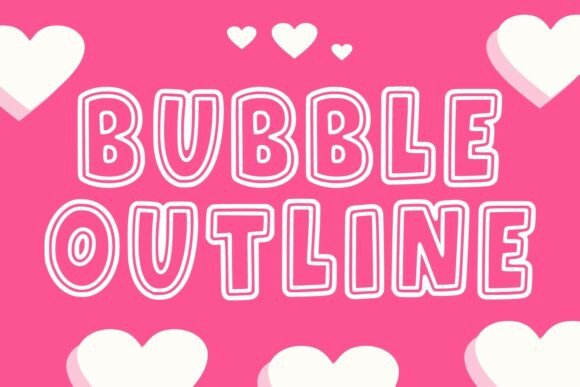
There's something undeniably joyful about letterforms that feel light, approachable, and full of personality. Bubble Outline captures that energy perfectly—a display typeface built around rounded shapes, soft edges, and an outline style that gives each character a sense of depth without feeling heavy. Whether you're designing a birthday invitation, crafting social media posts for a children's brand, or putting together packaging for a playful product line, this font brings a warmth that's hard to replicate with more traditional options.
What Makes This Typeface Visually Distinct
At its core, Bubble Outline is an outline font, meaning the interior of each letter remains open while the edges carry the visual weight. This creates a lighter, airier feel compared to solid display fonts. The rounded geometry gives every character a soft, approachable quality—no sharp corners, no aggressive angles. It reads as friendly and inviting almost immediately.
The outline treatment adds another layer of versatility. Because the letters aren't filled in, you can layer them over photographs, patterns, or colorful backgrounds and let those elements show through. That transparency effect is something solid fonts simply can't offer, and it opens up creative possibilities for designers working on posters, apparel graphics, or digital content where visual depth matters.
For anyone familiar with display fonts versus serif or sans serif options, Bubble Outline sits firmly in the decorative category. It's not meant for body text or long-form reading. Instead, it shines in headlines, titles, logos, and short bursts of text where personality needs to come through loud and clear. Think of it as the font equivalent of a friendly wave—it grabs attention without demanding it.
Practical Applications Across Industries
The versatility of a font like this becomes clear when you start mapping it against real projects. Here's where Bubble Outline tends to work especially well:
- Children's branding and products: Nursery wall art, kids' clothing lines, toy packaging, and educational materials all benefit from lettering that feels safe and playful. The rounded shapes naturally appeal to younger audiences and the parents shopping for them.
- Love-themed and Valentine's designs: The soft, bubbly aesthetic pairs beautifully with romantic projects—greeting cards, Valentine's Day promotions, wedding save-the-dates with a casual tone, or anniversary merchandise.
- Social media content: Instagram stories, Pinterest graphics, TikTok overlays, and YouTube thumbnails often need bold, eye-catching type that reads quickly at small sizes. Outline fonts work particularly well here because they don't overwhelm visual content sitting behind them.
- Stickers and decals: The clean outline style translates beautifully to die-cut stickers, planner accessories, and laptop decals where the negative space inside the letters becomes part of the design.
- Party invitations and event materials: Birthday parties, baby showers, school events, and community gatherings call for typography that feels celebratory without being overly formal.
- Merchandise and apparel: T-shirts, tote bags, mugs, and phone cases designed for a younger or more casual audience benefit from typefaces that feel handmade and approachable rather than corporate.
- Blog headers and website accents: While you wouldn't set an entire website in Bubble Outline, using it for section headers, call-to-action buttons, or featured post titles can inject personality into an otherwise minimal layout.
Pairing Bubble Outline With Other Fonts
No typeface works in isolation, and that's especially true with decorative display fonts. The key to using Bubble Outline effectively is understanding what to pair it with. Since it carries so much visual personality on its own, it needs a quieter partner—a clean sans serif or a simple serif font that handles the supporting text without competing for attention.
A few pairing approaches worth testing:
- With a geometric sans serif: Fonts like Montserrat, Poppins, or Nunito complement the rounded forms of Bubble Outline while providing the readability needed for body copy, captions, or product descriptions.
- With a simple serif: If your project leans slightly more sophisticated—think boutique branding or editorial layouts—a minimal serif like Lora or Playfair Display can ground the playful headline font with a touch of elegance.
- With a handwritten script: For projects that lean heavily into the crafty, handmade aesthetic, pairing Bubble Outline with a casual script font can create a cohesive, whimsical feel. Just be careful not to overload the design with too many decorative voices at once.
The general rule of thumb: use Bubble Outline for headlines, titles, and short accent text, then let a more neutral typeface handle everything else. This creates visual hierarchy and keeps the design feeling intentional rather than chaotic.
Readability and Design Considerations
Outline fonts come with a specific set of strengths and limitations that are worth understanding before you commit to using one in a project. Because the letterforms are hollow, they can lose legibility at very small sizes or when placed over busy backgrounds. This isn't a flaw—it's just the nature of the style.
A few practical tips for getting the most out of Bubble Outline:
- Size matters: Use it at larger sizes where the outline detail is clearly visible. At small sizes, the open interior can make letters harder to distinguish, especially for readers scanning quickly.
- Background contrast: If you're layering the font over a photograph or pattern, make sure there's enough contrast between the outline stroke and the background. A subtle drop shadow or a semi-transparent backing shape can help the letters stand out.
- Color choices: Bright, saturated colors work beautifully with this font's personality. Pastels create a softer, more nursery-appropriate look. Dark outlines on light backgrounds offer the strongest readability.
- Spacing and kerning: Display fonts sometimes need manual kerning adjustments, especially in logo work. Check the spacing between letter pairs and adjust as needed to maintain visual balance.
Licensing and Commercial Use
Before using any premium font in a commercial project, it's worth reviewing the licensing terms carefully. Most professional typeface licenses distinguish between personal use and commercial use, and some have specific restrictions around embedding in digital products, using in templates for resale, or including in merchandise sold at scale.
If you're a small business owner planning to use Bubble Outline on products you sell—t-shirts, mugs, stickers, digital downloads—confirm that the license covers that use. If you're a designer working on client projects, check whether the license allows you to deliver the font files to your client or if they need their own license. These details vary between foundries and distributors, so reading the fine print upfront saves headaches later.
For content creators and marketers using the font in social media graphics, blog headers, or advertising materials, most commercial licenses cover those applications without issue. The important thing is to verify rather than assume.
Fitting Bubble Outline Into Your Design Toolkit
Every designer, whether professional or hobbyist, benefits from having a range of typeface styles available. A solid sans serif for everyday text, a serif for editorial or formal projects, a script for elegant accents, and a display font for moments that call for real personality. Bubble Outline fills that last category beautifully.
It won't replace your workhorse fonts, and it shouldn't. But when a project calls for something cheerful, approachable, and visually engaging—a children's brand identity, a Valentine's Day campaign, a set of party invitations, or a line of playful merchandise—it delivers exactly the right tone. The outline style gives it an extra dimension of versatility that solid bubbly fonts don't offer, making it a worthwhile addition to any creative's collection of design assets.
The best way to understand whether a font works for your needs is to test it in context. Set your headline, pair it with your body font, drop it onto your actual background, and see how it feels. Typography is as much about instinct as it is about theory, and a font like Bubble Outline makes that instinct pretty easy to trust.