Azmira: Bridging Arabic Calligraphy and Modern Design
There’s a moment in every design project where the typography either holds the entire composition together or quietly undermines it. If you’ve ever worked with Arabic text, you know the stakes feel even higher. Arabic letterforms carry centuries of artistic tradition—sweeping curves, intricate connections, and a rhythm that feels almost musical. But finding a typeface that honors that legacy while still feeling fresh and usable in contemporary contexts? That’s where things get tricky. Azmira steps into that space with quiet confidence, offering a modern Arabic display font that doesn’t force you to choose between cultural authenticity and clean, current aesthetics.
What Makes Azmira Stand Out Visually
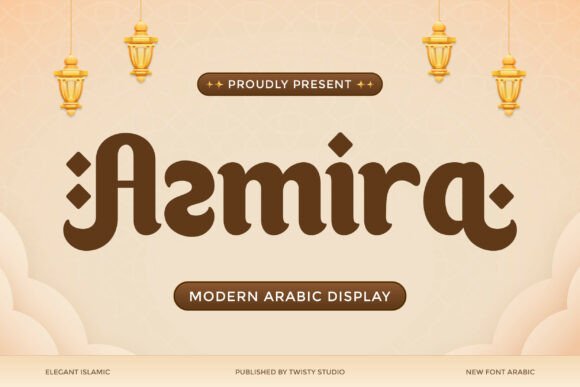
At its core, Azmira draws inspiration from classical Arabic calligraphy but filters those influences through a decidedly modern lens. The letterforms feature smooth, flowing curves that feel organic without being overly ornamental. There’s a consistency to the stroke weight and spacing that gives the typeface a polished, professional quality, but it never feels sterile or mechanical. Each character has enough personality to stand on its own—distinctive shapes that catch the eye—yet they work together in a way that feels cohesive and balanced.
This balance is harder to achieve than it sounds. Many Arabic display fonts lean too heavily in one direction: either they embrace traditional calligraphic flourishes to the point where they become difficult to read at smaller sizes, or they strip away so much character that they could be any generic typeface. Azmira finds the middle ground. The curves are smooth but defined. The lines flow naturally but maintain structure. It’s the kind of font that looks equally at home on a luxury brand’s packaging as it does on a tech startup’s landing page.
Where This Typeface Really Shines
Think about the last time you saw a brand identity that felt genuinely cohesive—the logo, the website, the social media posts, even the business cards all spoke the same visual language. Typography is the thread that ties all of that together, and choosing the right display font for Arabic text can make or break that consistency. Azmira works beautifully across a wide range of applications precisely because it carries enough visual weight for headlines and logos while remaining legible enough for shorter body text in certain contexts.
For logo design, the font’s distinctive letterforms give brands an immediate sense of identity. A café owner in Dubai, a fashion label in Riyadh, or a digital agency in Beirut could each use Azmira and end up with logos that feel completely different—because the font adapts to context rather than imposing a single rigid mood. For packaging design, the smooth curves and elegant proportions translate beautifully onto boxes, bags, and labels, especially for products in the food, beauty, or lifestyle spaces where visual appeal directly influences purchasing decisions.
On social media, where attention spans are measured in fractions of a second, a bold and distinctive Arabic typeface can stop the scroll. Azmira’s visual clarity makes it effective for Instagram posts, story overlays, and even video thumbnails where text needs to read instantly at small sizes. For websites and blogs, pairing Azmira with a clean sans serif font for body text creates a natural hierarchy that guides readers through the content without visual fatigue.
And then there are the applications people sometimes overlook: invitations and event materials, editorial layouts, poster design, merchandise, and digital products like e-books or online course materials. Anywhere you need Arabic text to feel intentional and elevated, this typeface delivers.
Pairing Azmira with Other Fonts
No font exists in isolation, and the real magic often happens in how you combine typefaces. One practical approach: use Azmira for headlines, logos, and display text, then pair it with a simpler companion for longer passages. A clean sans serif font works well for body copy in digital contexts, keeping the overall design feeling modern and readable. If you’re going for something warmer or more editorial, a subtle serif font can complement Azmira’s curves without competing for attention.
The key is contrast without conflict. You want the fonts to feel like they belong together but serve different roles. Test your pairings at multiple sizes—what looks balanced in a large headline might feel cramped or disconnected when scaled down for a caption or footnote. Print a few samples if you can, or at least view them on different screens. Small decisions like line spacing and letter spacing can shift the entire feel of a layout, so don’t rush this step.
Practical Considerations Before You Commit
Before integrating any premium font into your workflow, it’s worth thinking through a few practical details. First, check what font styles are included. Does the typeface come with multiple weights, or is it a single style? Having access to a regular, bold, and light version gives you more flexibility when building out a full brand identity or designing multi-page layouts. Second, review the licensing terms carefully. If you’re using the font for commercial projects—client work, products for sale, paid marketing materials—you need to make sure your license covers that use. Most quality design assets include clear licensing information, but it’s always worth confirming before a project goes live.
Readability is another consideration that deserves real attention. Display fonts are designed for impact, not for setting paragraphs of text. Use Azmira where it’s meant to be used: headlines, titles, short phrases, and display contexts. For longer Arabic text passages, you’ll want a dedicated body font that prioritizes legibility at smaller sizes. This isn’t a limitation—it’s just how good typography works. The best brand identities use different typefaces strategically, assigning each one a specific role based on its strengths.
Building Stronger Brand Identity Through Thoughtful Typography
Typography might seem like a small detail in the larger picture of branding and marketing, but it’s one of the most powerful tools you have for shaping perception. The fonts you choose signal sophistication, playfulness, tradition, innovation—often before a single word is actually read. For businesses and creators working with Arabic-speaking audiences, this carries even more weight. Your audience brings cultural associations and expectations to every visual interaction, and the right typeface respects those expectations while still carving out space for something new.
Azmira gives you that opportunity. It’s a creative font built for modern projects that don’t want to abandon the richness of Arabic visual culture. Whether you’re a designer building out a client’s brand identity, a small business owner creating your own marketing materials, or a content creator looking for something that feels authentic and contemporary, this typeface offers a solid foundation to build on. The real value isn’t just in how it looks—it’s in how consistently and effectively it communicates across every touchpoint where your audience encounters your work.